

The Importance of Building a Strong Tech and Engineering Team
06 Nov, 20239 minutes
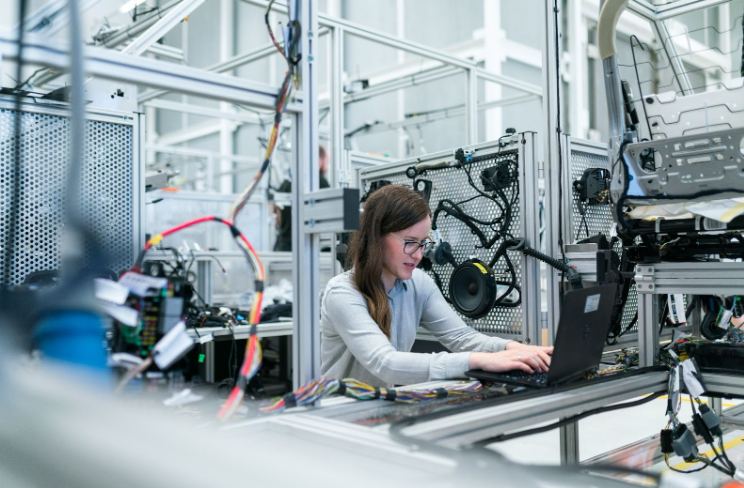
In today’s landscape, businesses rely on software and technology more than ever before. Even industries traditionally considered non-technical now depend on technology to assist them in their development. However, technological advancements have become increasingly intricate as they have extended to crucial functions like communication, marketing, and infrastructure development. Failing to adapt swiftly by establishing a well-structured, resilient tech and engineering team could jeopardise a company's competitive edge.
Assembling the perfect team isn’t easy. It sparks various questions and involves employing multiple skilled individuals in software development, data, design, testing, and hardware, depending on your business needs.
This guide is here to help. We’ll delve deeply into the key benefits of building a robust technical engineering team and shed light on the key roles crucial for your business's success.
The Benefits of a Well-Structured Tech and Engineering Team
You seriously limit your team’s potential when you neglect to hire specialised professionals, especially in technology or logistics. However, if you build a diverse tech and engineering team, you can expect to be rewarded with success in multiple different areas.
Why Do You Need a Dedicated Tech and Engineering Team?
Here are the key benefits of ensuring your business has a tech and engineering team:
Digital Transformation
Technology, software, and systems advancements are developing rapidly, with no signs of stoppingpredictions to stop. Digital transformation is one of the most significant ways to develop and remain competitive in the digital age. Over 92% of SMEs articulate that digital transformation has been pivotal for meeting customer demands in a changing business landscape.
Adopting digital technologies and staying up-to-date with new technological trends by employing a well-structured tech and engineering team has several advantages for companies, including:
Improving Efficiency: Process automation and the digitalisation of systems limit the chance of human error and speed up tasks. Repetitive tasks traditionally take up a large section of staff time. Automating and streamlining software and systems, including the digitalisation and analysis of data, leaves you and your staff more time to focus on other aspects of their position and increase the profitability of your business.
Digital workplaces can also improve staff productivity by up to 30% through an increase in platforms that support collaboration.
Enhancing Customer Experience: Digital transformation equips your business with streamlined software and platforms, enabling the delivery of more intuitive services to customers. This involves creating accessible websites and mobile applications and enhancing user communication tools.
By analysing customer activity, a business gains deeper insights into customer habits, allowing for tailored content that precisely meets their demands.
Cost Saving: While digital transformation may require several up-front costs, developing new systems like cloud accounting and cloud storage software will reduce hardware and outsourcing costs. Digital developments may also assist in reducing staffing costs by reducing the labour costs associated with unstreamlined processes.
Retaining a Competitive Advantage: Businesses unable to keep up with the latest technology to simplify business processes are falling behind. Adopting the latest methods can increase efficiency and reduce cost, all while offering customers platforms and services tailored to improve customer experience.
Experts can assist with implementing and training current and future technological evolution. From website development to mobile applications, tech and engineering teams can help develop your business in these areas.
Business Progression: Digitalisation provides the technologies that improve business speeds, efficiency, agility, collaboration and customer satisfaction. Trained tech and engineering teams can provide this transformation, elevating your business.
Data Analysis
All businesses create data. Elevating a business involves integrating a specialised tech and engineering team to analyse data stemming from customer purchases, growing trends, and company activity. This analysis facilitates improved decision-making, a deeper understanding of customer behaviour, product enhancement, operational efficiency, and tailored risk management.
This acquired knowledge can be applied across various departments to improve your business’s overall efficiency, including:
Trendspotting: Technical engineering specialists can build software capable of analysing business data. This allows you to identify clear patterns in purchases, service use and other crucial data points.
Trendspotting can also benefit the marketing side of businesses. Effective marketing strategies can be crafted based on trending information acquired from the data from personalised systems built by a number of engineers and designers..
Crafting effective marketing strategies is possible by leveraging trending information obtained from personalised systems developed by a team of engineers and designers.
Measuring Profitability: Analysing data correctly can give your business a detailed insight into the current and future financial predictions, enabling well-educated actions regarding business profitability.
Monitoring Business Reputation
Engaging with customers is incredibly important. Companies that respond on review websites acquire up to 49% higher revenue than businesses that do not, largely due to their ability to retain customers.
Along with enabling better decision-making and tailored risk management, tech and engineering teams can also use collected data to monitor your business’ reputation. Consistent collection and monitoring of online customer reviews and feedback responses contribute to the ongoing process of building and maintaining a positive brand image.
Personalised Software Development
Custom software is often essential for businesses to meet their unique needs and those of their customers. However, it can become a significant expense. Maintaining an in-house team of software specialists can eliminate the need for outsourcing. In-house technical engineering teams can create tailored software solutions for each business without incurring costly expenses.
Technical Support
As the experts, a tech and engineering team can provide the correct technical support for the organisation. This may include training on products or software, sharing their knowledge, troubleshooting, and technical problem solutions. Solving technical issues quickly enables you and your team to quickly return to your key responsibilities.
Business Digital Security
No matter the size of the business, in digital workplaces, every system that operates on the internet can be subject to cyber-attacks or information breaches. No company is exempt, with 58% of all reported cyberattacks falling on small businesses.
If your business network is accessed by a hacker, your customer lists, product designs, growth plans, manufacturing process and company banking details could be at risk. A dedicated team trained in cyber security can assist in minimising and preventing cyber attacks, as well as train employees to identify potential risks and protect their data online.
Key Roles to Consider When Building Your Team
The number of people you need on your tech and engineering team will vary depending on the company's size and the business's personal needs. For example, a new sales business with a limited capacity for a significant increase in staffing will differ in its needs from a fully established digital marketing company.
While considering your business requirements and needs, take a look at the most popular job roles in a tech and engineering team below to learn more about what each specialist can bring to your company.
Software Engineering Jobs
Software engineers possess a holistic approach to their jobs, focusing on the broader perspective. Their expertise lies in designing, implementing, and overseeing systems meant to address particular issues or serve specific purposes. Operating on a larger scale, these engineers consider the software's interactions with other systems. They also collaborate with various departments to ensure that the design aligns seamlessly with the system's life cycle.
Your business needs a software engineer to:
- Develop custom software based on overall system needs.
- Create systems to ensure business software is running efficiently.
- Troubleshoot system bugs and complete maintenance work on software to prevent outsourcing.
- Integrate hardware components into systems to perform the desired function.
- Create user-friendly experiences for customers, including designing websites, apps, and systems with usability in mind.
- Maintain a web presence by creating other digital platforms for your business to engage with customers.
- Provide technical support to the rest of the company.
Software Developers
As of 2021, there were over 23.4 million active software developers worldwide, and this number is still growing. The sheer volume of these specialist developers illustrates businesses' need for their skills.
Like software engineers, tech and engineering team developers design, implement, and troubleshoot systems. Software developers, however, focus on designing specific aspects of systems or software. This includes the development of specific code for the system.
Your business needs software developers to:
- Design and develop specific software tailored to business requirements, from internal tools to customer-facing applications.
- Create and run complex code for specialised system software creation.
- Test and correct computer applications.
- Use tools like Azure and Atom to create mobile and computer applications.
- Refine systems to meet business needs and ensure all software is running correctly.
- Coordinate with software engineers to ensure all specialised software integrates with a more extensive system.
Both software engineers and developers play a vital role in software success.
Data Architects
Data architects mainly specialise in the development of databases. Their responsibilities usually involve analysing current data, planning future databases, translating business needs into data streams, and creating data management procedures. Nearly all companies create and hold data, meaning that data architects can put their skills to work in almost any sector, from technology and finance to healthcare and defence.
Any business with customer, client, or staff data needs a data architect to:
- Develop database models to store company information.
- Analyse data so your company can make informed decisions based on empirical evidence.
- Design data processing systems to determine how any data is collected and stored.
- Work alongside information security analysts to ensure all data is secure and not at risk of data breaches.
Cloud Engineer
Approximately 90% of businesses now use cloud-based solutions to communicate and store data. Cloud computing architectures are the first port of call for anything related to cloud computing architecture or cloud data storage.
Cloud-based applications are a significant aspect of digital transformation in a business. These specialists are responsible for designing, planning, integrating, maintaining, and supporting cloud-based systems. Experienced in programming languages like Ruby and Java, cloud engineers are an integral part of the storage advancements of the digital age.
Your business needs cloud engineers to:
- Design, develop, and implement a cloud strategy tailored to business needs.
- Adapt cloud-based applications to the growth scale of the business.
- Optimise data storage and implement data recovery plans.
- Identify cost-effective cloud solutions to meet the business' budget.
- Update cloud software to ensure efficiency.
Technical Support Specialists
Most businesses are developing new technologies and software to level up in a digitally dominated landscape. Technical support specialists are vital to any business that uses software or technology. In every tech and engineering team, it is fundamental to have individuals who have the skills to diagnose software and hardware issues.
Your business needs technical support specialists to:
- Assist staff, clients, and customers with technical issues and troubleshooting any developed software.
- Answer complex questions and issues related to hardware, IT services, and software.
- Provide training and guidance on the efficient use of developed software and technologies.
- Provide general technical engineering support to the business.
Test Engineers
Every designed software product needs to be tested to ensure it functions as well as possible. While software engineers, developers, and data analysts are experienced in testing their developments, test engineers are dedicated to the quality assurance process, saving other specialists’ time. The goal of a test engineer is to ensure that any software meets specified quality standards. Test engineers are also responsible for the creation and planning of the testing.
Your business needs test engineers to:
- Ensure all software and applications that are developed are well-tested and free of flaws.
- Communicate with other tech and engineer specialists to amend aspects that do not meet the specified quality standards.
Information Security Analysts
Digital transformations result in multiple positive outcomes for your business. However, the integration of more information into data storage and cloud systems has increased the opportunities for cyber attacksksmore opportunities for cyber attacks now exist as more information is integrated into data storage and cloud systems. Fortunately, employing information security analysts can greatly reduce your risk of cyber attacks.
Information security analysts have a critical information-safeguarding role as they monitor networks and systems for security breaches. Responsibilities include predicting attack likelihood, implementing security measures, and quickly responding to breaches.
Your business needs information security analysts to:
- Monitor the security of the organisation’s systems and assess the vulnerability of networks and systems.
- Develop and implement any security protocols that would benefit the business, focusing on ensuring regulations are adhered to.
- Create incident reports surrounding any breaches, near breaches, or lost data.
- Manage access controls to data and systems that align with robust security protocols.
- Work with IT teams to secure any systems staff or customers use.
If your business needs support locating these tech and engineering experts, a specialist engineering recruitment agency can assist you in advertising, finding, and hiring the best individuals to form your well-structured team.
Final Thoughts on Tech and Engineering Teams
Businesses place a heavy reliance on technology to advance their operations. However, when technology is used incorrectly or is not supported by a specialist team, business growth possibilities are limited. A well-structured tech and engineering team can enable success in your business’ operational activities, digital transformations, data analysis, and several other vital aspects of business activity.
When building a tech and engineering team, having a truly diverse group of developers, beginners, and technicians brings various skills and specialisations. This diversity eliminates the necessity of outsourcing and helps uplift your business. The collective work of these specialists, each offering a distinct skill set, establishes a resilient and innovative foundation for your business team.
Need Support Building the Perfect Technical Engineering Team?
Our guide provides invaluable insights into the significance of crafting a well-structured team and outlines the specialised talent necessary to create a perfect tech and engineering team. We have an impressive track record of pairing the top talent with the brightest businesses in the sector across Great Britain, Northern Ireland, Ireland and the US, making us experts in technical and engineering recruitment.
Contact us for more information on how we can support you with your technical and engineering recruitment needs.